
installation
Resonance Swarm
2025
© Jenny Nijenhuis
Resonance Swarm
2025
© Jenny Nijenhuis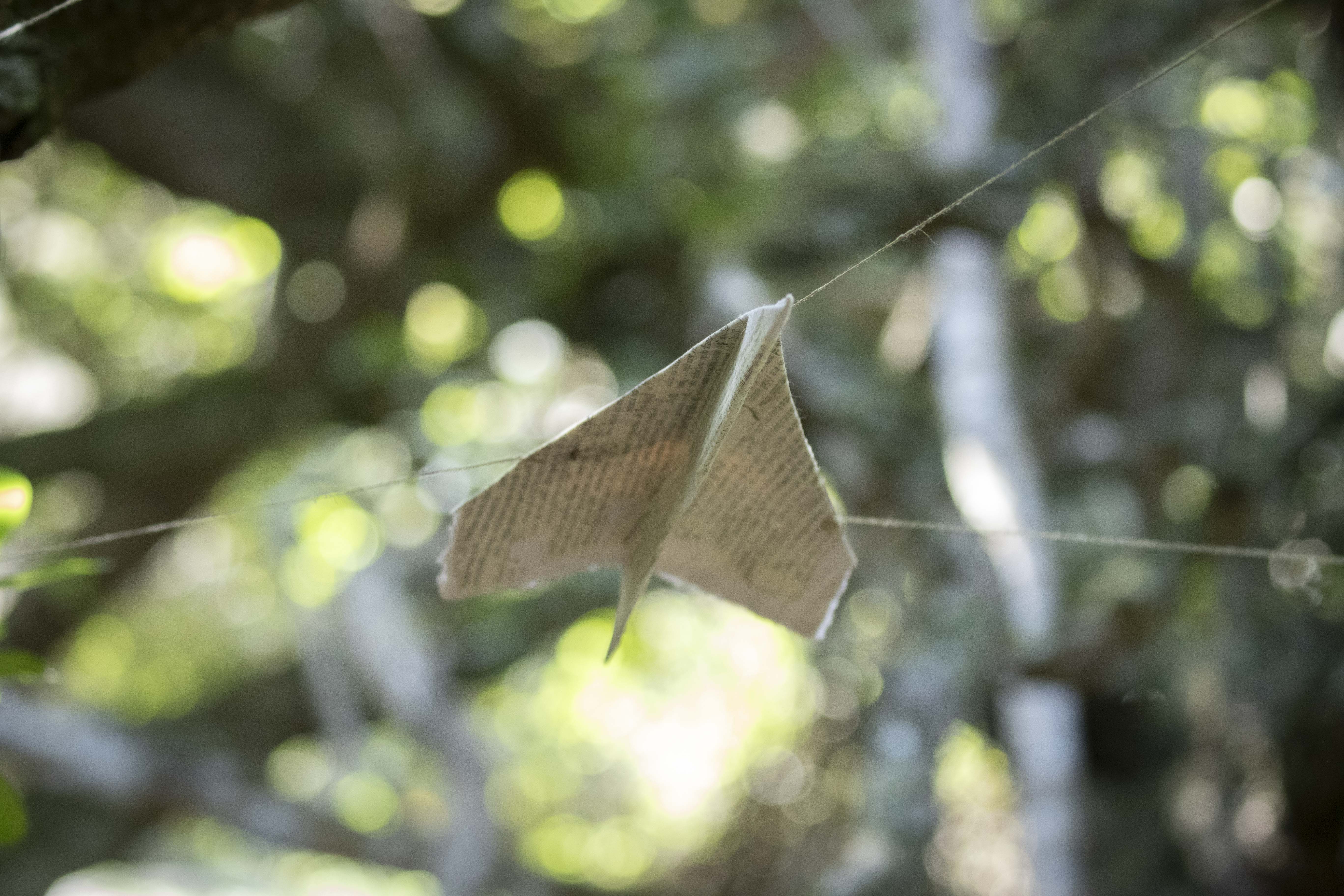
Resonance Swarm
2025
© Jenny Nijenhuis
Resonance Swarm
2025
© Jenny Nijenhuis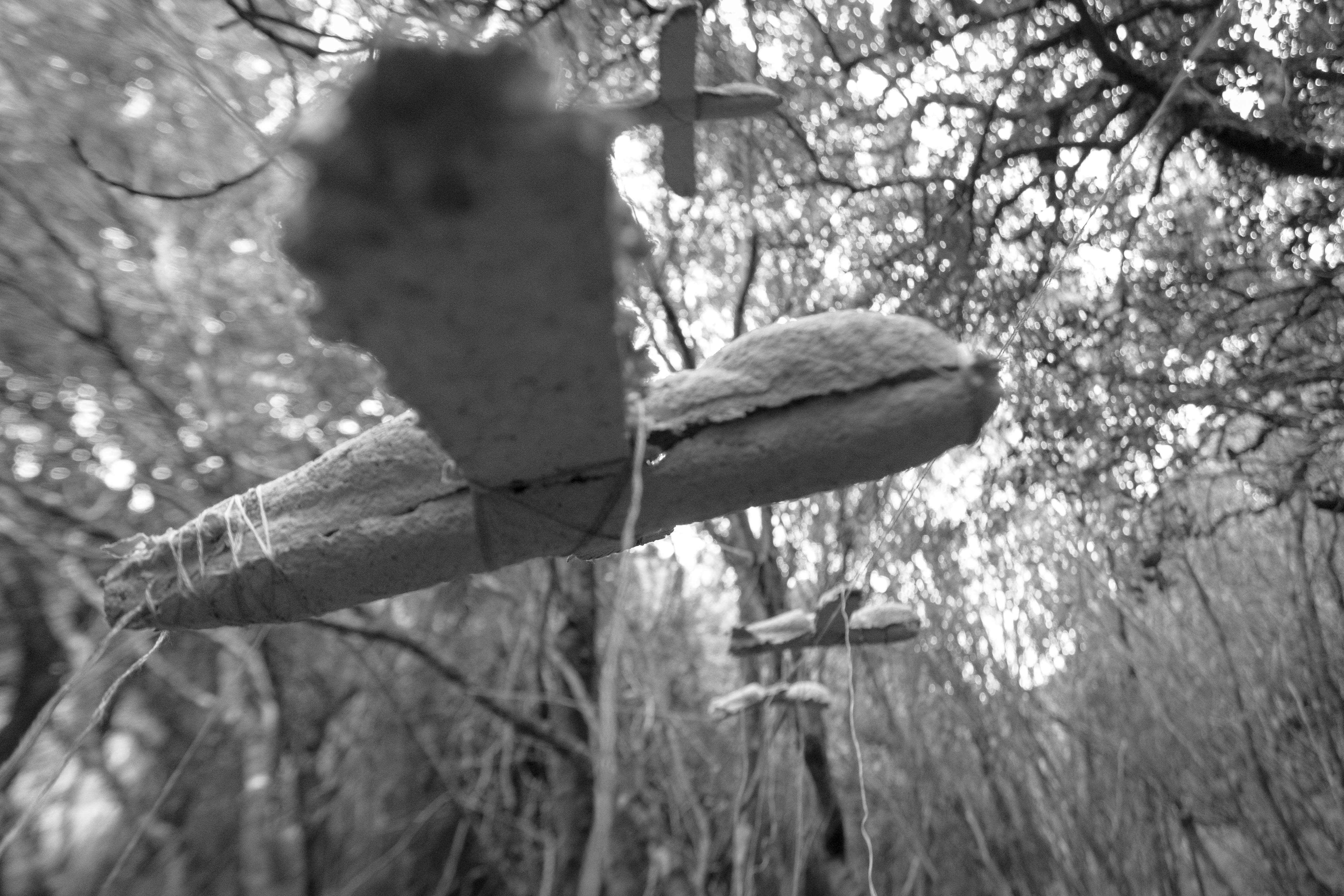
Resonance Swarm
2025
© Jenny Nijenhuis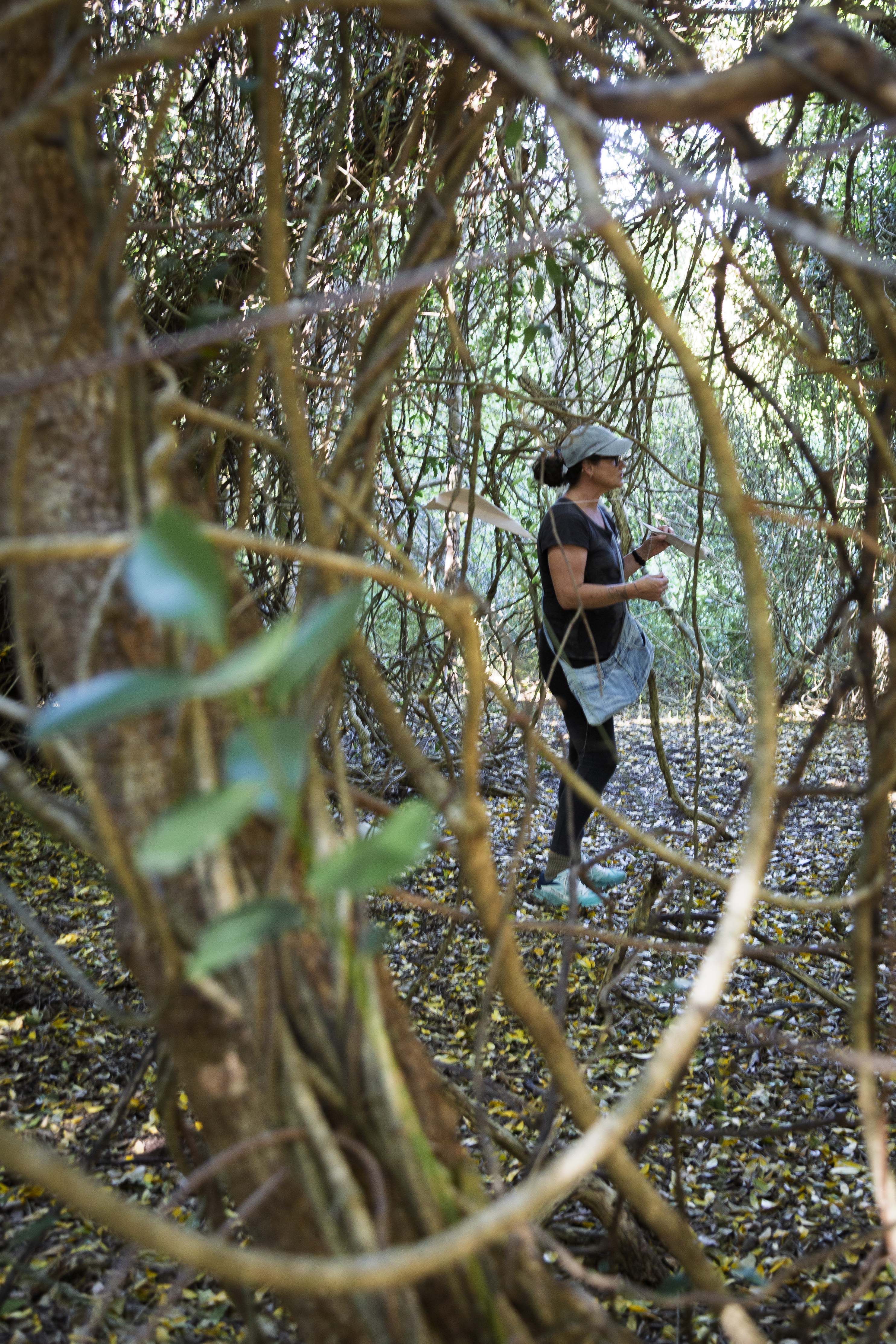
Resonance Swarm
2025
© Jenny Nijenhuis
Resonance Swarm
2025
© Jenny Nijenhuis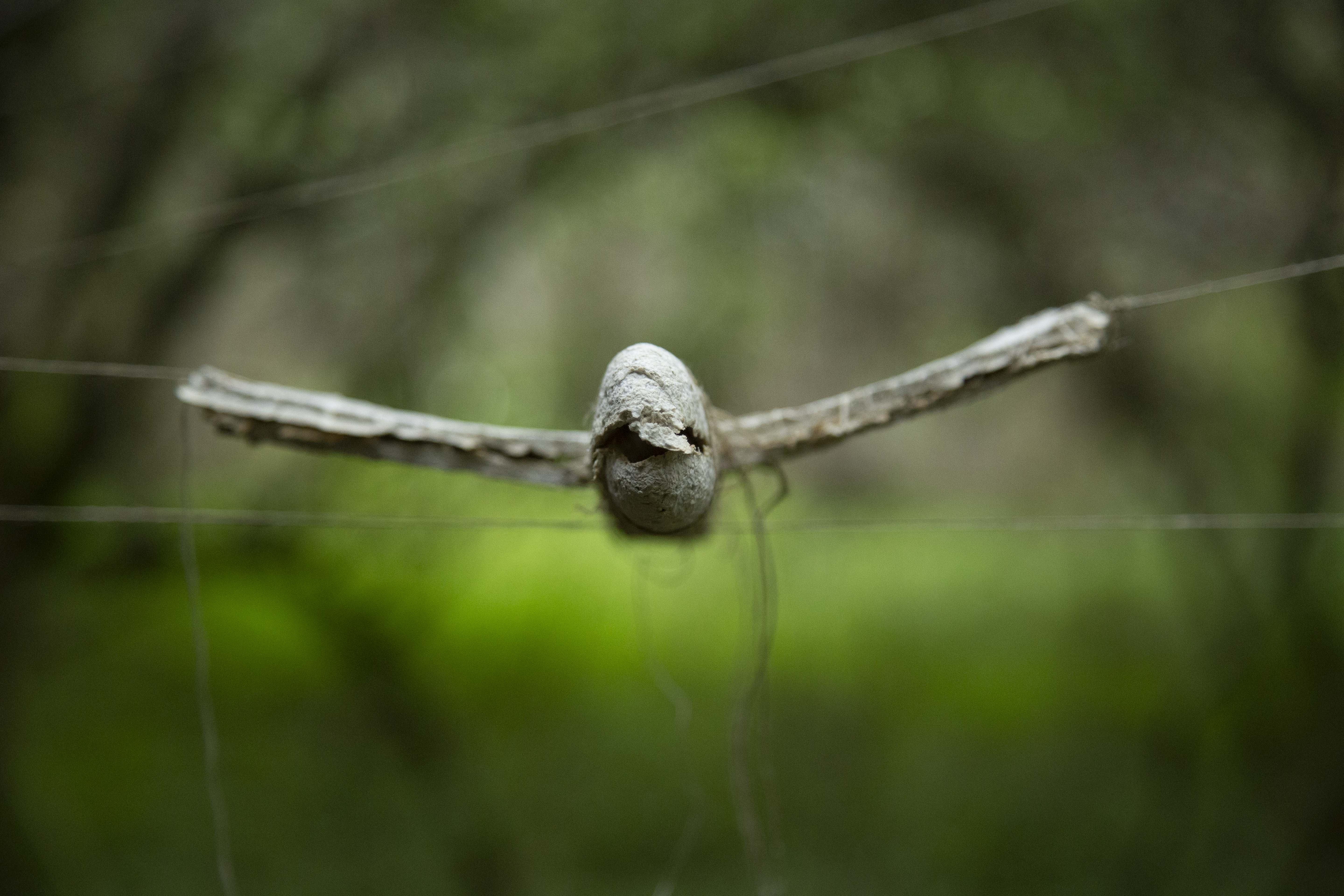
Resonance Swarm
2025
© Jenny Nijenhuis
Resonance Swarm
2025
© Jenny NijenhuisResonance Swarm
Site responsive installation at Bodhi Khaya Residency
| Medium: | Installation made from mushroom pulp and bound onsite using handmade fiber thread |
| Date: | 2025 |
| Resources: | https://youtu.be/WCksQO_wMOc?si=z4xsxKYhpdD0HYaU |
| Image Credit: | Josie Borain / Claire Gunn / Bronwen Trupp |
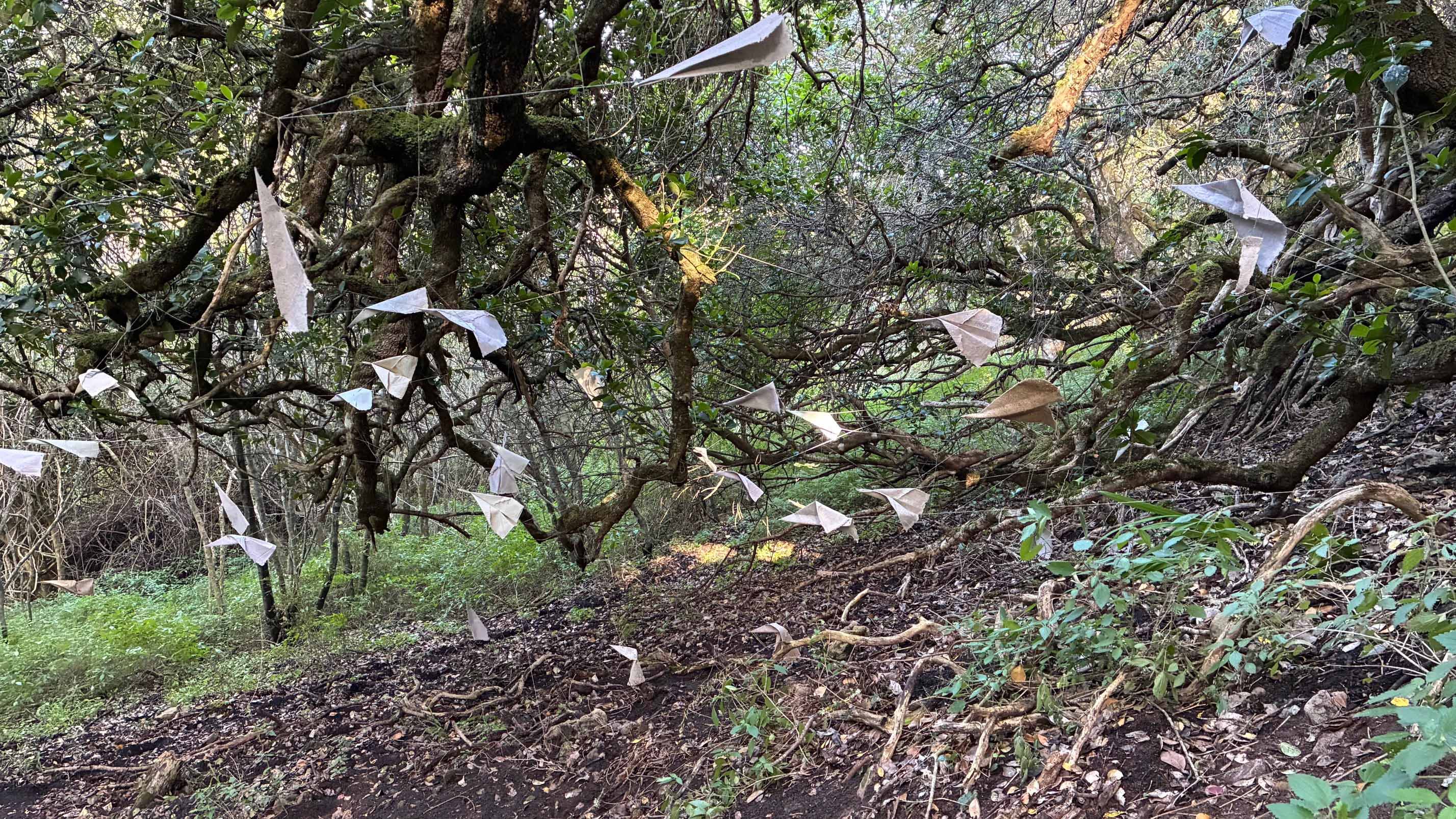
Resonance Swarm is an installation of paper planes and drones made from mushroom pulp and bound onsite using handmade fiber thread. These materials, foraged in the forest at Bodhi Khaya, will eventually return to the earth.
The paper planes represent prayers, drawing on the Japanese tradition of tying written prayers to shrine branches to invite healing and release hurt. I bound the planes into the branches and root structure of a 500+ year-old Milkwood tree, forming a swarm. Four mushroom-pulp drones hover ahead, oriented toward the swarm to generate a palpable tension.
By using foraged mushrooms to construct the suspended installation, I aim to invoke the intricate mycelial network - delicate, threadlike filaments of the unseen underground web that sustains the larger fungal organism. Mycelium connects individual plants, facilitating the transfer of water, nitrogen, carbon, and other nutrients, while reliably transmitting signals across the same frequency range.
Old-growth forests possess resilient, balanced energy fields, with trees harmoniously linking what exists above the ground to what lies beneath.
This metaphor also speaks to collective human consciousness, an intricately connected energetic field that, when in resonance, can ascend to a higher vibration. Seen this way, we can influence the expression of collective consciousness, the frequency it embodies, and, in turn, the reality we experience together.
In a world which favours commodity and force over connection, inclusion and vulnerability, we create dangerous divisions between ourselves and the land through commerce.
In my creative practice, I explore the interplay between vulnerability and violence, as well as the links between structural violence and the climate crisis.
Structural violence can be defined as the [political and economic] systems and forces – public policies, institutional practices, cultural representations, and other norms – that work to perpetuate violence and inequities (Farmer et al, 2006).
Through our systems and cultural practices, we have disconnected from the animal world with a staggering lack of empathy, violence, and a disregard of other living beings.
We are facing a convergence of complex systemic crises, ranging from declining trust in institutions to global health issues, economic and political instability, and widening inequality. All of these are compounded by the escalating climate crisis and deteriorating state of our planet.
These issues demand fresh thinking and a willingness to explore alternative approaches to address them effectively. I wish to explore who we are beyond binary thinking and individual awakening, recognizing humanity as part of the intricate web of life.